


The Story of Five Robots (Graphic Novel), 2022
Updated: May 5
The Story of Five Robots
People used to call me Dr. Kim-a genius scientist who built robots. To protect the Earth from a possible aliens invasion, I created many of them. Among them, five robots remained until the very end. They required no human pilots. Instead, they possessed their own consciousness—loyal, pure, and unwavering. There was no need to sacrifice a human pilot. But in their place, each robot carried within it the quiet premise of its own sacrifice. Perhaps that is why I stayed with them for so long, unable to let them go.
Each of my robots was remarkable in its own way, yet none of them was without flaw. After many years of defending the Earth, each had developed its own kind of damage-slowly, but irreversible.
다섯 로봇 이야기
사람들은 나를 김 박사라 불렀다. 로봇을 만드는 천재 박사, 그렇게 불렀다. 언제 닥칠지 모르는 외계 문명의 위협으로부터 지구를 지키기 위해 나는 많은 로봇을 만들었다. 그중 마지막까지 남은 다섯 로봇들이 있다. 이 로봇들은 사람이 올라타서 조종할 필요가 없는 자의식을 가진 충직하고 순수한 로봇들이었다. 조종사를 희생할 필요가 없었지만, 대신 로봇 스스로의 희생이 전제되었기에 안타까운 마음으로 오랫동안 함께했다.
나의 로봇들은 하나하나 훌륭했지만, 저마다 작은 문제를 가지고 있었다. 오랫동안 지구를 지키기 위한 수많은 활동으로 인해 모두 조금씩 장애가 생긴 것이다.

Unit No.1: Lemon
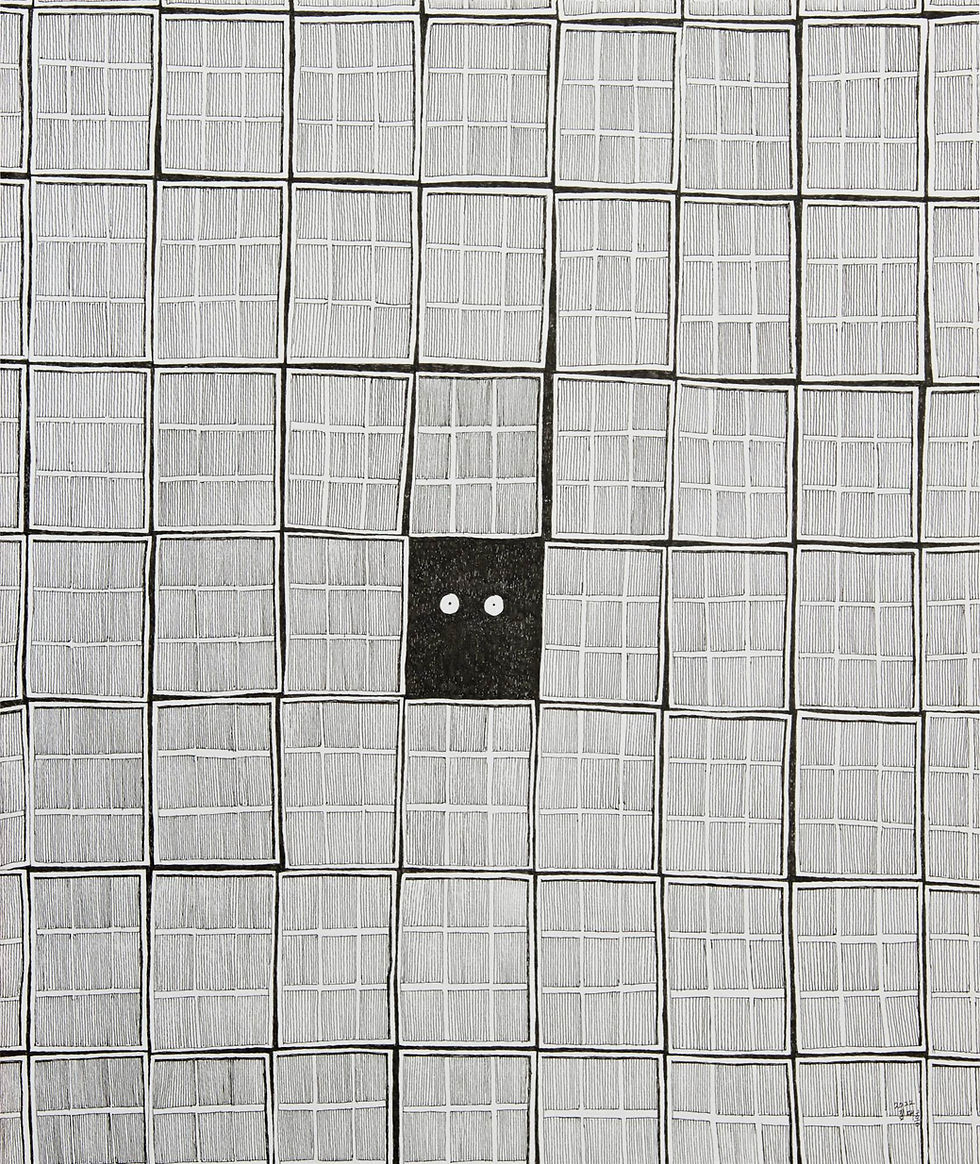
The first unit was called “Lemon.” From afar, his round shape resembled the fruit, and so the name remained. He was built to withstand invasions by massive extraterrestrial machines, and his size reflected that purpose—enormous, heavy, and powerful. But being the first of his kind, he carried many technical limitations.
At the time, there was no efficient way to power such a massive body. Aware of the dangers of nuclear energy, I designed his system to run on fossil fuel instead. Whenever he moved, the roar of his engines and the exhaust pouring from his body created a striking sight.
But in the end, it was not an alien invasion that made him stop. He chose to stop himself. He came to understand that the amount of carbon dioxide he emitted posed a greater threat than any alien force ever could. And so, rather than guarding the blazing ocean he loved beneath the sun, he shut himself down.
Now, he lies quietly in a corner of the laboratory, in energy-saving mode—motionless, as if he had simply fallen asleep.
1호 레몬
1호의 이름은 ‘레몬’이다. 멀리서 보면 몽실몽실한 레몬처럼 생겨 그런 이름이 붙여졌다. 녀석은 거대 외계 로봇의 침략을 대비해 만들어졌기에 덩치가 굉장하다. 하지만 가장 먼저 발명된 탓에 기술적인 문제가 많았다. 당시 이런 큰 로봇을 적은 에너지로 움직일 만한 마땅한 기술이 없었다. 핵의 위험성을 잘 알고 있는 나로서는 기름을 사용하는 방향으로 녀석의 구동 체계를 만들어야 했다. 거대하고 육중한 몸이 움직일 때마다 엔진이 내는 굉음과 여러 곳에서 뿜어져 나오는 배기가스가 참 멋졌다.
하지만 녀석은 외계의 침략이 아닌 기후 변화로부터 지구를 지키기 위해 스스로 움직임을 멈췄다. 자신이 뿜어내는 이산화탄소량이 외계 침략의 위협보다 더 크다는 것을 잘 알고 있었기 때문이다. 그렇게 좋아하는 뜨거운 태양의 바다를 지키는 대신, 지금은 에너지 절약 모드에 들어간 채 그냥 연구소 한켠에 아무렇게나 누워 있다.
Unit No.2: One Day
Unlike the others, Unit No.2 ran on solar energy instead of fossil fuel. She was called “One Day”.
At first glance, One Day appeared quite large. But most of her body was made up of solar panels, so her true form was much smaller than it seemed. Without those panels, she resembled a creature with a large shell and a tiny core—something like a small hermit crab.
One Day, too, had her limitations. Because of the nature of her energy system, the amount of usable power was never enough for her size. When deployed, she had to detach all of her solar panels and operate without an external power source. In that state, she could function for only fifteen minutes.
Sometimes, half in jest, she would say that she wished she could run for one day. In the end, that quiet wish became her name: “One Day.”
2호 하루
화석연료 대신 태양광으로 움직이는 2호는 ‘하루’라 불린다. 하루는 덩치가 커 보이지만 녀석의 몸 대부분은 태양광 집광판이기에 실제 크기는 생각보다 훨씬 작다. 집광판을 벗어 놓으면 마치 껍데기 커다란데 알맹이는 조그마한 굴과 비슷하다.
하루에게도 문제가 있었다. 에너지 기술의 특성상 그 큰 모습에 비해 실제 쓸 수 있는 에너지의 양이 넉넉하지 않았다. 출동 시에는 집광판을 모두 떼어낸 채, 별도의 에너지원 없이 나가야 했는데, 그렇게 되면 하루는 단 15분만 활동할 수 있었다. 가끔은 농담처럼 자신의 활동 시간이 하루였으면 좋겠다고 말하곤 했고, 그의 바람은 그의 이름이 되었다.

Unit No.3: Telly
Unit No.3, called “Telly,” was a robot specialized in sensors and telecommunications. Her radar system was powerful enough to see across vast distances, and for areas beyond its reach—hidden by the curvature of the Earth—she communicated with satellites, allowing her to observe and listen to the world from afar. Telly’s role was to detect signs of alien invasion at an early stage, to prepare her companions for deployment, and to maintain communication with them.
But one day, something went wrong.
While watching over the Earth, Telly saw and heard too many human stories. Beneath the beautiful surface of life, she was forced to witness a quiet darkness. And so, she began to break. She suffered a severe nervous collapse, and with it came a deep depression. Day after day, she could do nothing but weep.
It pained me to see her that way.
So I asked, “Shall I remove your sensors?”
Telly said nothing.
“It’s all right,” I told her.
At those simple words, she trembled, then quietly answered, “Yes.”
And so, I removed every sensor from her body.
From that day on, Telly could no longer see—yet remained, still to protect the Earth.
3호 테레비
3호 ‘테레비’는 센서와 텔레커뮤니케이션에 특화된 로봇이다. 레이더의 성능이 뛰어나 아주 먼 곳을 볼 수 있었고, 둥근 지구 표면의 곡률로 인해 레이더가 닿지 않는 곳은 인공위성과 이야기하며 지구의 곳곳을 보고 들을 수 있는 녀석이다. 테레비는 외계의 침략을 조기에 알아내어 동료들의 출동을 준비하고 그들과 통신하는 것이 그의 역할이다.
어느 날 이 녀석에게도 문제가 찾아왔다. 지구를 감시하는 동안 사람들의 너무 많은 이야기를 보고 들은 것이다. 삶의 아름다운 표면 아래의 거대한 어둠을 계속 봐야 했었고, 그래서 그는 심한 신경쇠약과 함께 우울증을 앓게 되어 매일매일 울기만 했다.
가슴이 아팠던 나는 녀석에게 ‘센서들을 떼어낼까?’라고 물어봤고, 마음 여린 녀석은 아무 말이 없었다. 나는 ‘괜찮아.’라고 말을 건냈다. 녀석은 그 짧은 말에 흐느끼더니 ‘예’라고 대답했다. 그렇게 나는 모든 센서를 녀석에게서 떼어냈고, 그렇게 테레비는 앞을 볼 수 없는 지구를 지키는 로봇이 되었다.

Unit No.4: Sloth
Unit No.4, called “Sloth,” was remarkably fast. He was the quickest one among them, designed for rapid response in times of crisis. Though he carried neither heavy weapons nor great strength, his reflexes and mobility were unmatched.
And yet, despite his speed, he never acted arrogantly. He knew how to slow down and walk alongside his companions. Because he would often adjust his pace to match ours, always a little too gently, we ended up calling him “Sloth.”
But his speed came at a cost. The faster he moved, the faster his parts wore down.
Over time, I replaced his components again and again—small parts, large ones, more than I could count. Because of this, he let go of the naive hope that he might one day become new again. Instead, a quieter thought settled in: that one day, he would simply come to a stop.
4호 늘보
4호 ‘늘보’는 참 날래다. 이들 중 가장 빠른 녀석으로 문제가 발생했을 때 초동 대처용으로 만들어졌다. 많은 무기도 힘도 없는 녀석이지만 순발력과 기동력만큼은 최고다. 게다가 그렇게 날랜 몸을 가지고 있음에도 뻐기지 않고 동료와 함께 천천히 걸을 줄 아는 정말 멋진 로봇이다. 모두가 함께 있을 때 우리를 배려한답시고 너무 느리게 움직였기에 우리는 녀석을 늘보로 불렀다.
하지만 빠른 속도만큼이나 부품이 닳아가는 속도도 빨랐다. 녀석은 크고 작은 수 많은 부품을 교체하는 경험을 자주 하다 보니 언젠가는 새 로봇이 되겠거니 하는 순진한 기대보다는, 언젠가는 완전히 멈추어 버릴 거라는 현실적인 생각을 하였다.

Unit No.5: U2
Unit No.5, called “U2,” was the only robot with wings. He could glide through the sky—perhaps his purpose was less about defending the Earth than about projecting my childhood dream. The dream of jumping from a rooftop and silently gliding through the night sky, which I could never fulfill, may have been the selfish reason I created him.
U2 was originally built to deploy Unit No.2, “One Day,” when Unit No.4 was handling early-stage responses. Because of this, he was closely tied to One Day. He cared for her so deeply that he often pushed himself beyond his own limits.
He knew better than anyone that One Day had only fifteen minutes of operation time—and that brief window had become increasingly unstable and inconsistent. So he kept pushing forward, trying to compensate for her fragility. But over time, fatigue accumulated in his engines and wings. Microfractures slowly spread through his entire body.
And now, he has wings—but flying is no longer possible for him.
5호 U2
5호 ‘U2’는 이들 중 유일하게 날개가 있는 로봇이다. 하늘을 활공하며 날 수 있는, 어쩌면 지구 방어의 목적보다 내 어릴 적 꿈의 투영이 더 큰 목적이었는지도 모르겠다. 옥상에서 점프하여 아무도 모르게 밤하늘을 누비는 나의 꿈, 이룰 수 없었던 그 꿈을 5호를 통해 실현시켜 보려는 이기적 마음이었는지도 모르겠다.
녀석은 4호가 초동 대처하고 있을 때 태양광 집광판을 떼어놓은 2호를 투입하기 위해 만들어졌다. 그래서 2호와 단짝이었는데 2호를 너무 아끼던 나머지 자신이 감당할 수 있는 속도를 자주 넘어섰다. 왜냐하면 하루가 15분이란 걸, 게다가 지금은 그 15분도 채우지 못하는 들쭉날쭉한 2호의 배터리 사정을 누구보다 더 잘 알고 있기 때문이었다. 그러다 보니 엔진과 날개에 피로파괴가 조금씩 쌓여 갔고 이제는 날개는 있지만 날지 못하는 로봇이 되었다.
Operation Meeting
That day, as always, there was no alien invasion. It was just an ordinary day, one of those days when various incomprehensible news kept swirling in my head. As usual, we were doing our respective tasks, watching the distant sky, monitoring an alien invasion that would never happen.
One thing was certain: there had been no alien invasion, and there would never be one. Yet the Earth was getting hotter and dirtier day by day. Perhaps that was an even greater threat than any alien invasion.
Unit No.3, who could not see; Unit No.1, who lay motionless; Unit No.5, who could not fly; Unit No.2, who could not move for more than fifteen minutes; and Unit No.4, whose condition was more severe than my own arthritis. Looking at them—beings who had lived shorter lives than mine, yet seemed to have endured far longer years—I felt a quiet sense of sorrow.
I gathered them together and held a slightly different kind of operation meeting. I told them that they had faithfully defended against alien invasions all this time, and that it was now time to hand that duty over to humanity. They had more than earned the right to be free. They should not grieve their retirement, but instead live out the dreams they had long buried.
They did not answer me. But I understood their hearts. They, too, knew the futility of what they had been doing, and yet had continued to wear down their own lives out of affection for me and for one another.
And so, that day’s meeting became our last operation meeting.
작전회의
그날은 늘 그렇듯 외계의 침공 따위는 없었던, 모든 것이 일상적인 날이었다. 이런저런 알 수 없는 뉴스가 머릿속을 어지럽히던 그저 그런 날. 여느 때처럼 우리는 각자의 일을 하고 있었다. 먼 하늘을 바라보며, 결코 일어나지 않을 외계의 침략을 감시하면서.
한가지 분명한 것은, 외계의 침공은 없었고, 앞으로도 없을 테지만 지구는 자꾸 뜨거워지고 또 더러워지고 있었다. 어쩌면 그것은 외계의 침공보다도 더 큰 위험이었다.
앞을 보지 못하는 3호, 마냥 누워있는 1호, 날지 못하는 5호와 15분도 못 움직이는 2호, 그리고 나의 관절염보다 증세가 더 심각한 4호. 나보다 살아온 날은 짧지만, 나보다 더 많은 세월을 나아간 녀석들을 바라보니 서럽다는 생각이 들었다.
나는 녀석들을 모아 놓고 평소와는 조금 다른 작전 회의를 열었다. 나는 그들에게 말했다. 너희들은 그간 충실히 외계의 침략에 대응해왔으니, 이제는 그 임무를 사람들에게 넘겨주자고. 너희가 이때껏 해온 일을 잘 알고 있기에, 자유를 가질 자격이 충분하고도 넘친다고. 은퇴를 서러워하지 말고, 묻어 두었던 꿈들을 이루며 살았으면 좋겠다고 말이다.
그들은 내 말에 아무 대답도 하지 않았지만 나는 그들의 마음을 잘 알고 있었다. 그들 역시 자신들이 하던 일의 무의미함을 알고 있었고, 그럼에도 나와 서로에 대한 애정으로 각자의 삶을 마모시켜 왔다는 것을.
그렇게 그날의 회의는, 우리들의 마지막 작전 회의가 되었다.

The Journey
A few days later, they told me that they had decided to set out on a journey together—as a single, unified robot. Unit No.2 attached her solar panels to Unit No.1, who could no longer move, so that he might move again. The others connected their neural networks to him as well. Of course, solar power alone was nowhere near enough to sustain all five of them, and so their movement was slow—very slow. And yet, for the first time, they had become one. And all of them felt that this unified form was far cooler than when they had stood alone.
As they traveled, they would occasionally send me stories from their journey. In quiet, gentle voices, they told me how happy they were, and what it felt like to travel together. For Unit No.3 in particular, the experience was all the more profound, as she had neither seen nor heard anything for so long. The others chattered endlessly, telling her trivial things—what had happened in the world since she removed her sensors, how the weather had been, and countless small, insignificant details. It seemed that she had forgotten all the things that once troubled her, and simply enjoyed talking with her friends.
They had no reason to move quickly, nor the ability to do so. And so they walked, slowly—simply moving forward, step by step. A journey without the pressure of having to accomplish anything. They told me they had never known that having no destination could be such a joy.
A long time passed. Then one day, they shared their visual network with me. They could not hear my voice, but I could see into their hearts. They stood in what must have been one of the most beautiful places in the world. Under the blazing summer sun, on a cliff overlooking a sky stained deep red by the setting sun. All of them were smiling—brightly, innocently. After all, it was their first journey together like this. Perhaps this was what it meant to be one.
여행
며칠 뒤, 그들은 합체 로봇이 되어 함께 여행을 떠나기로 했다고 내게 말해주었다. 2호는 움직일 수 없던 1호에게 움직일 수 있도록 자신의 태양광 집광판을 붙여주었고, 다른 로봇들은 1호에 그들의 신경망을 연결했다. 물론 태양광만으로는 다섯 로봇을 움직이기에는 턱없이 부족했기에, 그들의 움직임은 느리고 또 느렸다. 그렇게 모두는 처음으로 하나가 되었고, 혼자일 때보다 합체한 모습이 훨씬 더 멋지다고 다들 생각했다.
먼 여행을 떠난 그들은 틈틈이 내게 여행 이야기를 보내왔다. 얼마나 즐거운지, 그리고 함께하는 여행이 어떤 느낌인지를 잔잔한 말투로 전해주었다. 특히 3호는 그간 듣고 보지 못했기에, 이 여행이 더 크게 다가왔다고 했다. 다른 로봇들은 3호가 센서를 떼어낸 이후 세상에 어떤 일이 있었는지, 그리고 그간의 날씨가 어땠는지 같은 사소한 이야기를 수다스럽게 들려주었다. 3호는 자신을 괴롭히던 이야기들을 모두 잊은 듯, 친구들과의 수다를 즐겼다고 한다. 빠르게 움직일 이유도, 그렇다고 빠르게 움직일 수도 없었던 그들은 그저 천천히 길을 걸었다. 무엇을 꼭 해야 한다는 강박이 없는 여행. 그들은 목적 없다는 것이 이렇게 즐거운 줄 몰랐다고 말했다.
그로부터 한참의 시간이 흐른 어느 날, 그들은 내게 그들의 시신경망을 공유해왔다. 그들은 내 말을 들을 수 없지만 나는 그들의 마음을 바라볼 수 있었다. 그들은 세상에서 가장 아름다운 한 곳에 서 있었다. 강렬한 여름 햇볕 아래, 붉게 물든 석양이 펼쳐진 절벽. 모두가 해맑게 웃고 있었다. 하긴 이렇게 모두가 함께하는 여행은 처음이었을 테니까. 한 마음 한 몸이란 건 이런 걸까?

Now, they were preparing for their first flight together. For Units No.1, No.4, and No.3, it was their first time ever taking to the sky, and their excitement was unmistakable. As for Units No.2 and No.5, they were simply happy to finally share their experience with the others.
They pushed off the ground with all their strength and leapt from the cliff. All of them shouted in joy. At that moment, Unit No.5 spread his wings wide—for the first time in a long while. For the first time, all of them were looking in the same direction.
Their first flight, toward the blazing sunset, was quiet, breathtakingly beautiful.


Comments